Beam Layout Design in Shear Wall Structures Using a Diffusion Model Guided by Rule-Based Masks
Wenjie Liao1,2, Jikang Xia3,*, Yi Gu3, Xinzheng Lu3
1 School of Civil Engineering, Southwest Jiaotong University, Chengdu 610031, China
2 State Key Laboratory of the Bridge Intelligent and Green Construction, Chengdu 610031, China
3 Department of Civil Engineering, Tsinghua University, Beijing 100084, China
* Corresponding author
E-mail address: xiajk24@mails.tsinghua.edu.cn
Engineering Structures, 2026, 369: 123842.
DOI: 10.1016/j.engstruct.2026.123842
Abstract: Serving as critical load supports and transfer components in shear wall structures, beams require layout designs that balance mechanical rationality with architectural functionality constraints. Conventional design methods, which rely on engineers' expertise, are challenging to systematize and are inherently inefficient. Moreover, existing intelligent design algorithms have attempted to integrate constraints related to architectural space and mechanical topology while delivering sufficiently detailed outputs, ultimately resulting in suboptimal outcomes. To address these challenges, this study synthesizes engineering experience rules pertaining to spatial functionality and load-bearing constraints and encodes them into a mask that delineates potential beam placement locations on a building plan. Subsequently, a diffusion model, well-known for its ability to generate intricate design details, is employed to produce the corresponding beam layout from the image mask. This approach, designated as the mask-constrained diffusion model for beam layout design in shear wall structures, introduces a key innovation: mitigating the uncontrolled generative range typically associated with diffusion models during beam layout configuration. By embedding engineering knowledge into a mask that constrains the diffusion process, the generation boundaries are effectively regulated, ensuring controllable and effective design outcomes. Analysis indicates that the designs produced by the mask-constrained diffusion model surpass the quality of existing intelligent design methods, achieving a relative 35.0% improvement in consistency with engineer-generated designs while concurrently satisfying critical mechanical performance criteria. This study provides a novel perspective on the intelligent design of beam layouts and serves as a valuable reference for the application of diffusion models in the structural design of buildings.
Keywords: Generative structural design; Design automation; Topology generation ; Continuity of structural load-bearing; Architectural space segmentation
1 Introduction
The layout design of beams is a critical aspect of reinforced concrete shear wall structures [1,2] because it must simultaneously accommodate architectural spatial functionality and space segmentation requirements, efficient vertical load-bearing, and robust horizontal load resistance. The complex and diverse spatial configurations of shear wall structures provide considerable flexibility in beam placement, while non-rectangular architectural spaces further exacerbate the complexity of beam layout design. However, current beam layout design methods rely substantially on manual intervention, thereby resulting in low efficiency and impeding the effective transfer of high-quality design knowledge [3]. Consequently, intelligent design methods should be urgently developed for beam layouts that concurrently account for architectural space constraints and mechanical load-bearing mechanisms, thereby improving both the efficiency and quality of shear wall-beam structural design.
Current research on intelligent architectural structural layout design primarily follows two technical approaches:
(1) Graph-based modeling approaches (e.g., using graph neural networks (GNNs)) effectively learn the topological relationships among structural components and have been applied to tasks such as shear wall layout design [4–6], beam layout design [7,8], shear wall-beam co-design [9,10], component sizing [11], material quantity estimation [12], structural optimization [13], and overall building layout design [14,15]. However, these methods exhibit limited capability in representing architectural geometric features (e.g., curved boundaries and irregular components), leading to discrepancies between generated results and practical engineering requirements.
(2) Deep learning methods based on image generation (e.g., convolutional neural networks (CNNs) and generative adversarial networks (GANs)) can effectively capture pixel-level geometric relationships between architectural spaces and structural component layouts. Representative studies include the shear wall prediction models by Pizarro et al. [16,17], GAN-based intelligent design frameworks developed by the research group of Lu et al. [7,18–24], the topology generation technique presented in StrucTopo-GAN [25], and various methods for generating architectural space layouts [26,27]. Nonetheless, the adversarial training mechanism inherent to GANs is prone to pixel-level defects (e.g., component discontinuities) and suboptimal local detail quality in complex structural designs [28].
Diffusion models [29] have recently been applied to structural generative design because their iterative denoising process supports stable training and detailed spatial outputs [28,30]. Beyond conventional pixel-space U-Net models, latent diffusion models perform denoising in compressed feature spaces and have been used for high-resolution three-dimensional component generation, SIMP-based topology optimization, and steel frame-braced layout design [31–34]. Diffusion Transformers replace the convolutional denoiser with patch-based self-attention and have been explored for topology generation in both structured and unstructured design domains [35–38]. These approaches are particularly advantageous for high-dimensional fields, multimodal or pretrained conditions, and large simulation-generated datasets.
However, the present task differs in both data regime and target representation. The dataset contains over 600 engineer-designed building plans, and the target beam channel is a sparse binary line topology whose validity depends on thin members, supported endpoints, and local continuity. Latent compression may attenuate or merge these small features, whereas patch-based Transformers introduce additional capacity and data requirements to preserve pixel-level connections. Therefore, this study retains a pixel-space U-Net diffusion backbone to avoid confounding backbone changes with the effect of the rule-based mask. The main focus is to convert engineering knowledge into a learnable spatial constraint; nevertheless, a controlled comparison with latent-diffusion and Transformer-based diffusion backbones is provided in Section 5.2 to evaluate the suitability of the adopted pixel-space U-Net under the current data regime.
Within these approaches, mask- or constraint-guided generative methods can be further categorized according to the semantic role of the constraint. First, geometry- or spatial-condition masks encode pre-existing spatial entities or user-defined spatial conditions, such as architectural walls and openings in structural layout generation [28], room-position and semantic maps in residential floor-plan generation [39], and multi-channel spatial conditions in urban building-layout generation [40]. Second, partial-input masking supports interactive layout completion by concealing a subset of user-specified layout attributes and generating the missing attributes, as in MaskPLAN [41]; such masks do not define a physical admissible region for structural members. Third, graph-based beam-layout methods employ potential beams as discrete candidate edges constructed before inference, from which a GNN selects beam or non-beam members [8]. Although these methods enhance controllability, they differ fundamentally in representation and function from the proposed method. Our rule-generated mask is a binary, pixel-level admissibility map derived from explicit rules for vertical load transfer, shear wall-end continuity, and architectural-space segmentation. It constrains where the diffusion model may generate beams, rather than merely encoding existing geometry, masking incomplete attributes, or enumerating candidate graph edges.
Unlike shear wall structure generation, which is inherently constrained by the locations of architectural walls, beam layout design is more free-form and is not confined to wall or opening boundaries. When diffusion models are directly applied to beam layout generation without appropriate placement constraints, they may produce engineering-infeasible outcomes (e.g., cantilevered beams or discontinuous supports). Thus, incorporating constraints related to spatial functionality and space segmentation, direct vertical load-bearing, and stable horizontal load resistance into the intelligent generation process of beam layouts represents a critical challenge for achieving high-quality designs using diffusion models.
To address this challenge, this study encodes engineering rules derived from architectural space and load-bearing requirements into masks that are integrated into the diffusion modeling process. These masks serve to constrain the generation boundaries of the diffusion model, thereby ensuring controllable and effective design outcomes. Specifically, the masks are utilized during image generation to obscure certain data features, enabling a controlled generation process that addresses issues arising from non-geometric constraints, randomness, and spatial limitations [14,42–48]. In this study, relevant engineering experience was explicitly encoded as rules by defining legal regions for beam placement (e.g., ends of shear walls and connection points with openings) and constructing a binary mask to limit the generation boundaries of the diffusion model. This strategy enabled the diffusion model to retain its generative freedom while adhering to engineering standards, thereby achieving a rule- and data-driven synergistic optimization.
Compared with the shear wall diffusion model developed by Gu et al. [28], the present study retains the general mask-conditioned diffusion framework but extends it from a geometry-supported shear wall generation problem to a rule-guided beam-topology generation problem. Candidate shear wall locations are generally attached to existing architectural wall axes, whereas beams may traverse interior spaces and must establish continuous load-transfer paths between architectural walls, openings, and shear wall ends. Accordingly, the principal contribution of this study is the conversion of engineering rules governing vertical-load transfer, shear wall-end connectivity, horizontal continuity, and spatial subdivision into virtual candidate beam paths and subsequently into a learnable binary mask. In addition, a beam-specific data representation and input-output configuration are established to integrate the mask, structural condition channels, and noisy beam target into the diffusion process. The network configuration is treated as a task-specific implementation rather than as an independent architectural innovation.
The remainder of this paper is structured as follows: Section 2 introduces the implementation process of the beam layout generation method driven by the mask-constrained diffusion model. Section 3 details the method for encoding engineering rules to generate masks. Section 4 presents the training and evaluation methodologies for the diffusion model. Section 5 presents an analysis and discussion of the proposed method, and Section 6 discusses representative case studies.
2 Generation of Mask-Constrained Diffusion Model-Driven Beam Layout
This study proposed an intelligent design method for beam layouts in shear wall structures operated by a diffusion model constrained by a rule-generated mask. As illustrated in Figure 1, the implementation process primarily comprises three steps: mask construction and dataset creation (Figure 1(a)), training and evaluation of the diffusion model (Figure 1(b)), and the application of the trained diffusion model (Figure 1(c)).
2.1 Mask construction and dataset creation
In this study, the drawings of over 600 sets of shear wall–beam structural designs were collected for training and testing, followed by preprocessing of the structural design data. Among these preprocessing steps, mask construction was the most critical. In Gu et al. [28], the mask used for shear wall generation was primarily derived from existing architectural wall and shear wall locations, while opening information and other design conditions were incorporated into the conditional tensor. This type of spatial mask is suitable for shear wall design because candidate shear walls are generally attached to existing architectural wall axes. Beam placement is fundamentally different because beams may cross interior spaces and connect structural supports for which no corresponding geometric line exists in the architectural input. Accordingly, the present study constructs virtual candidate beam paths using engineering rules related to vertical-load transfer, support above openings, shear wall-end connectivity, horizontal load-path continuity, and spatial subdivision. These candidate paths are subsequently rasterized into a binary mask that defines the admissible region for beam generation. This enhancement defines the global admissible region for beam layouts. Consequently, the proposed mask constraint method restricts the beam-generation process of the diffusion model to a specified area. The dataset used for both training and testing the diffusion model was generated based on this mask creation approach, as shown in Figure 1(a). Further technical details are discussed in Section 3. The resulting binary mask defines the admissible beam-generation region and is used consistently during both model training and model application. Its specific roles in the diffusion process are summarized in Sections 2.2 and 2.3 and formulated in Appendix A.
2.2 Training and evaluation of the diffusion model
A diffusion model conditioned on mask data was employed for beam layout generation, and its training process is depicted in Figure 1(b). During training, the mask is used not only to weight the noise-prediction loss but also to restrict the forward noising and noise-prediction processes to the admissible beam-generation region. The mathematical formulation of the masked forward process, masked loss, and reverse process is provided in Appendix A. For each sample, the target was represented by a single-channel beam-layout tensor, while architectural walls, shear walls, and door/window openings were separately encoded and concatenated to form a three-channel conditional tensor. The overall mask-conditioned diffusion framework and U-Net backbone followed those proposed by Gu et al. [28]. The beam-specific adaptation was implemented primarily through the input-output representation and task-specific network configuration rather than through a fundamentally new diffusion architecture.
Specifically, the U-Net adopted four encoder-decoder levels, with intermediate
channel numbers of  , and
, and  . This hierarchical configuration provides multi-scale feature
representations for learning the overall beam-system topology while preserving
the spatial resolution required to distinguish local beam connections.
. This hierarchical configuration provides multi-scale feature
representations for learning the overall beam-system topology while preserving
the spatial resolution required to distinguish local beam connections.
During training, Gaussian noise was progressively introduced only into the beam target within the mask region, whereas the architectural wall, shear wall, and door/window condition channels remained unchanged. The U-Net was trained to predict the noise added to the masked beam region. Model performance was evaluated using Intersection over Union (IoU), accuracy, recall, and F1 score. Further details of the diffusion formulation and training procedure are provided in Section 4, while the performance analyses and comparisons are presented in Section 5.
2.3 Model application
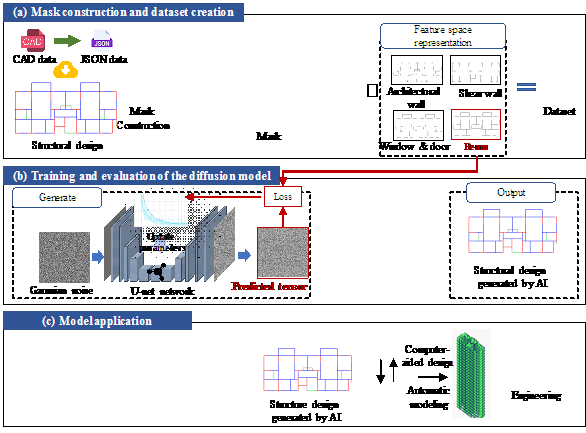
Figure 1. Mask-constrained diffusion model for beam layout design in shear wall structures
3 Mask Construction and Dataset Creation Methods
3.1 Mask generation method
During beam generation by the diffusion model, high-quality masks ensure that the beam layout conforms to requirements related to architectural spatial functionality and space segmentation, as well as load-bearing constraints. This subsequently controls the boundaries of the diffusion generation process and the validity of the design outcomes. In the design of shear wall residential structures, beam placement schemes are diverse, and the creation of masks effectively constrains the locations at which beam components can be generated. Xia et al. [9] constructed "potential beams" based on engineering design experience to assist in the combined design of walls and beams. The construction and application principles of these potential beams are fundamentally similar to those of masks. To ensure that beams generated by the diffusion model are placed in reasonable positions, this study adopts the construction rules of potential beams by embedding engineering experience rules into the mask construction process, thereby establishing rule-generated masks. The detailed mask construction rules are as follows (Figure 2):
a) Bear vertical load of architectural walls:
All architectural walls (except shear walls) that are candidates for shear wall placement are assigned masks, thus directly transferring vertical loads to the beam components.
b) Bear vertical load of door and window openings:
Doors and window components are directly assigned masks to transfer vertical loads to the beam components. Specifically, if a door or window object is connected to an architectural wall that enables beam placement, a mask is applied. Otherwise, a search is extended to determine whether a nearby shear wall can be connected. If such a shear wall exists, a beam mask is assigned. The search is confined to a single functional architectural space.
c) Bear horizontal load transferred by shear walls:
Beams (or additional shear walls) must be arranged at both ends of a shear wall to ensure continuity of horizontal load-bearing, enabling multiple shear walls to collectively resist horizontal loads. If such beam placements are absent at the ends of a shear wall, searches are conducted along both the axis of the extension of the shear wall and in the direction perpendicular to it, with the search confined within the same functional architectural space.
d) Segmentation of non-rectangular architectural space:
The corners of architectural components are identified, and multi-directional extensions are performed at these corners until the next architectural component within the same space is encountered. This process divides non-rectangular polygonal architectural spaces into multiple regular rectangles, thereby facilitating beam layout design and load-bearing. Data analysis of extensive shear wall structures has revealed that most beams are arranged at the junctions of different functional spaces and that both beam endpoints tend to be located at the intersections of architectural components.
e) Redundant Mask Cleaning:
If two masks overlap or are equivalent in the longitudinal direction and the distance between them is less than 0.5 m, the shorter mask is removed [9].
The rule-based mask defines an engineering-informed candidate domain rather than a predetermined beam layout. It converts rules for vertical-load transfer, shear wall-end connectivity, horizontal continuity, and spatial subdivision into candidate beam locations. The diffusion model then learns which candidate paths form the final beam topology from engineer-designed layouts.
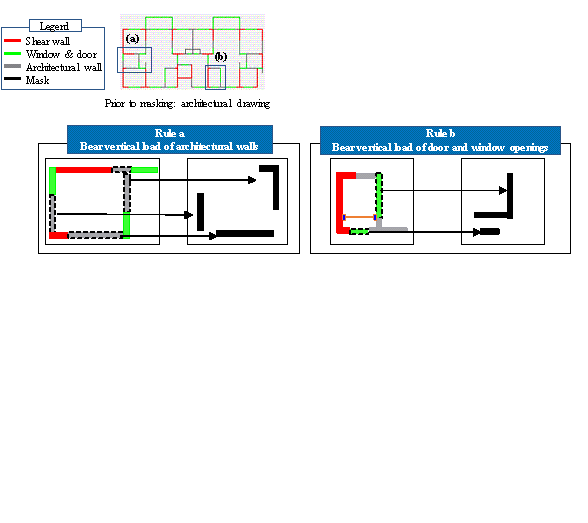
Figure 2. Process of rule-generated mask
3.2 Mask effectiveness evaluation: Coverage ratio
To objectively evaluate whether the placement of the rule-generated mask satisfies the requirements of structural design, this study adopts the potential beam coverage computation method described by Xia et al. [9] and maps it onto a pixel-level calculation of the mask coverage ratio (denoted as Rm). The corresponding mask coverage ratio, which assesses the quality of the mask placement, is calculated using Equation (1). A higher mask coverage ratio indicates a better representation of the engineering experience regarding beam placement; conversely, a lower coverage ratio indicates that several potential beam placement locations might be overlooked. Ideally, the mask coverage ratio should be sufficiently close to 100%. The mask generation method described in Section 3.1 was applied to over 600 sets of building structural data collected in this study, and the mask coverage ratio is expressed as Equation (1)

where pmask represents the binary tensor of the mask, and pbeam represents the binary tensor corresponding to the engineer-designed beam.
Table 1. Comparison on the mask coverage ratio of the proposed rule-generated mask with that of the potential beam method
|
Rule-generated mask (Mean ± Std.) |
Potential beam [9] |
|
|
Mask coverage ratio |
0.978
|
0.940 |

The mask coverage ratio, as shown in Table 1, achieved in this study indicates that under the condition of perfect (100%) predictions by an optimal model, the predicted beam layouts approximate 98% of the efficacy of the actual beam design. Compared with existing methods based on potential beams, the proposed rule-generated mask method improves the coverage ratio by 4.04%, indicating that the proposed mask construction approach is more effective for structural component generation.
3.3 Dataset
The CAD drawings of shear wall residential structures were cleaned
and processed to generate mask data using the aforementioned method. Gu et
al. [28] and Han et al. [49] demonstrated that feature space representations
based on structural components effectively mitigate the incorporation of unreasonable
prior information typically introduced by RGB color feature representations.
Consequently, this study maps building structural information into the feature
space. Figure 3 illustrates the procedure for generating the conditional tensor.
Boolean tensors for doors and windows, architectural walls, shear walls, and
beams are separately extracted from the architectural drawings and then concatenated
to form the input tensor. Using this process, two primary tensors are obtained,
namely the input Boolean and mask tensors. Based on classical diffusion model
training methodologies, a real image is required as the input to progressively
add noise [29]. In this study, the beam layout corresponds to the real image
input in the classical diffusion model. Hence, the input vector is defined
as  . Data from the other channels are
concatenated to form the conditional tensor:
. Data from the other channels are
concatenated to form the conditional tensor:
 , where the symbol
  denotes the concatenation operator.
All floor plans were rasterized onto a fixed
 -pixel canvas. For each project, the endpoints of architectural
walls, shear walls, doors/windows, beams, and potential beams were used to
determine the plan bounding box and its center
-pixel canvas. For each project, the endpoints of architectural
walls, shear walls, doors/windows, beams, and potential beams were used to
determine the plan bounding box and its center
 . The original coordinates were translated to this center
and isotropically scaled using
. The original coordinates were translated to this center
and isotropically scaled using  , followed by translation to the canvas center. Here, 246=256-10
reserves a total 10-pixel safety margin around the canvas boundary (approximately
5 pixels on each side), preventing boundary components from being clipped
during rasterization. Thus, the physical pixel size is project-specific and
equals 1/s mm per pixel. This sample-specific scale factor and the original
plan center were retained for inverse mapping from raster coordinates to the
CAD/PKPM coordinate system. Architectural walls, shear walls, doors/windows,
and beams were rasterized as one-pixel-wide centerlines and encoded as separate
Boolean channels. This isotropic, project-specific normalization preserves
the original aspect ratio while accommodating differences in plan scale among
projects.
, followed by translation to the canvas center. Here, 246=256-10
reserves a total 10-pixel safety margin around the canvas boundary (approximately
5 pixels on each side), preventing boundary components from being clipped
during rasterization. Thus, the physical pixel size is project-specific and
equals 1/s mm per pixel. This sample-specific scale factor and the original
plan center were retained for inverse mapping from raster coordinates to the
CAD/PKPM coordinate system. Architectural walls, shear walls, doors/windows,
and beams were rasterized as one-pixel-wide centerlines and encoded as separate
Boolean channels. This isotropic, project-specific normalization preserves
the original aspect ratio while accommodating differences in plan scale among
projects.
The original building cases were split into training, validation, and test sets in the ratio of 8:1:1 before data augmentation. Horizontal flipping, vertical flipping, and translation transformations were applied only to the training set [7], whereas the validation and test sets contained only unaugmented original cases; augmented variants of the same original case were not assigned to different subsets.
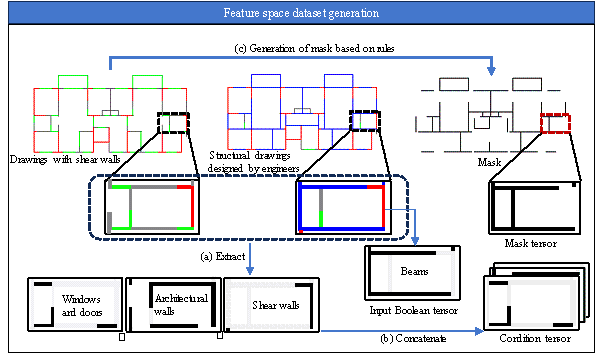
Figure 3. Generation process of the multi-channel dataset incorporating mask tensors
4 Diffusion Model Training and Evaluation Methods
4.1 Diffusion model generation method
Based on the diffusion model principles proposed by Ho et al. [29] and following the method used by Gu et al. [28] for generating shear walls, this study trained a diffusion model using masked data, as illustrated in Figure 4. Detailed training procedures and computation methods for the diffusion model are provided in Appendix A.
For quantitative validation and test evaluation, the masked portion of the initial state was initialized with Gaussian noise, while the complementary region was kept fixed by the mask. We used the standard stochastic ancestral DDPM reverse process, executing all 2,000 reverse timesteps from t = 1999 to t = 0 and sampling the posterior-variance term at each nonzero timestep. No DDIM sampler, timestep skipping, or other accelerated sampling strategy was used. The parameter sample_num = 8 was used only to record intermediate denoising states for visualization and did not reduce the number of reverse updates.
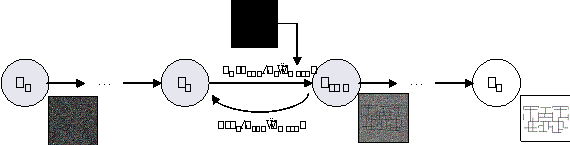
Figure 4. Mask-incorporated diffusion process considered in this study
In this study, the neural network architecture is based
on a U-Net augmented with an attention mechanism and time encoding. Figure
5 shows the structure of the U-Net. In the network, the first input layer
is the mask-processed image  , which has only one channel. The second input is the conditional tensor
 , which contains three channels. The parameters H1,
H2, H3, and H4 represent
the number of channels in the intermediate layers of the U-Net. Based on the
results of Gu et al. [28], H1 and H2 are
set to 64 and 128, respectively; H3 is set to 256; and H4
is generally set to 256.
, which contains three channels. The parameters H1,
H2, H3, and H4 represent
the number of channels in the intermediate layers of the U-Net. Based on the
results of Gu et al. [28], H1 and H2 are
set to 64 and 128, respectively; H3 is set to 256; and H4
is generally set to 256.
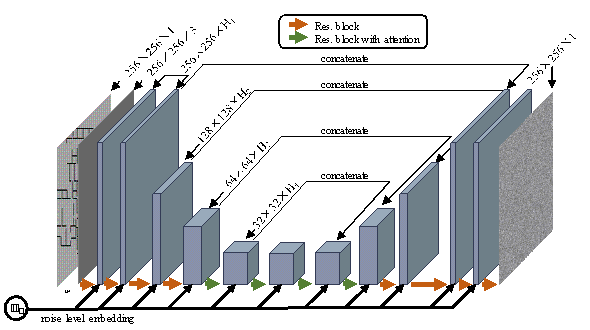
Figure 5. Architecture of the adopted U-Net-based diffusion model
4.2 Diffusion model training
During training, the U-Net parameters were initialized using Kaiming initialization [50]. To explore the generalization capability of the mask-constrained diffusion model, three learning rates were examined: 5 × 10⁻⁵, 1 × 10⁻⁵, and 1 × 10⁻⁶. The final model used a learning rate of 1 × 10^-5. Mean squared error was used as the loss function throughout training and validation. The network was optimized using Adam with a weight decay of 0. The training, validation, and test batch sizes were 4, 11, and 64, respectively. No preset maximum number of epochs or optimization steps was imposed; validation was performed every 100 epochs, and early stopping monitored the validation loss with a patience of 30 validation checks. The checkpoint with the lowest validation loss was retained for subsequent prediction and evaluation.
All reported experiments used one fixed random seed (42). To assess the potential overfitting risk associated with data augmentation, the training and validation MSE losses were recorded throughout training. Hyperparameter selection and early stopping were determined solely using the unaugmented validation set, whereas the unaugmented test set was used only for the final performance evaluation.
The experiments were conducted on a system equipped with an Intel Xeon E5-2682 v4 (64 cores) CPU running at 3.000 GHz, 2 × NVIDIA GeForce RTX 3090 GPUs, and the operating system Ubuntu 22.04.5 LTS (x86_64).
4.3 Design quality evaluation metrics
Metric 1: IoU
Intersection over union (IoU) is a widely used metric in intelligent design methods. It quantifies the difference between artificial intelligence (AI)-generated results and the engineer’s designs and succinctly captures the engineering experience inherent in the structural design [21]. In this study, the test dataset comprises shear wall structural drawings produced by leading design institutes in China, which represent a high standard of engineering design. Thus, the IoU is employed to assess the consistency between the AI-generated beam layouts and those drawn by engineers. The calculation is defined by Equation (2):

where  denotes the binary tensor representing the engineer-designed
beam distribution after mask processing, and
denotes the binary tensor representing the engineer-designed
beam distribution after mask processing, and
 denotes the AI-predicted beam distribution. As the
model predictions may not yield a standard binary tensor, the predictions
are processed as Equation (3):
denotes the AI-predicted beam distribution. As the
model predictions may not yield a standard binary tensor, the predictions
are processed as Equation (3):

The target beam tensor was encoded as +1 for beam pixels and −1 for background pixels, and the reconstructed output was clipped to the interval [−1, 1]. A pixel was classified as a beam when its reconstructed value exceeded 0.5. This conservative post-processing threshold retains only values in the upper part of the beam-coded range and helps suppress isolated false-positive responses close to the background level; it is not a probabilistic threshold.
Metric 2: Accuracy (ACC)
As the beam layouts in this study are generated based on masked predictions, the prediction accuracy must be evaluated at every pixel within the mask to assess the generalization ability of the model. Unlike in conventional confusion matrixes, the comparison here is confined to the masked architectural structure. The confusion matrix for the AI-generated beam layouts is illustrated in Figure 6. In this context:
A true positive (TP) is assigned when both the engineer’s and AI design indicate the presence of a beam in the overlapping region. A false negative (FN) occurs when the engineer’s design specifies a beam but the AI prediction does not. A false positive (FP) occurs when the AI prediction indicates a beam where the engineer’s design does not. A true negative (TN) is recorded when neither design specifies a beam.
Both the engineer-designed and AI-predicted beams are represented as
pixelated binary tensors,  and
and  , respectively. Their calculation is conceptually given by
Equation (4) and (5):
, respectively. Their calculation is conceptually given by
Equation (4) and (5):


Because the comparison between the engineer-designed and AI-predicted beams is performed within the mask, the mask tensor is defined as Equation (6)

Based on the definition of accuracy, ACC is expressed by Equation (7):

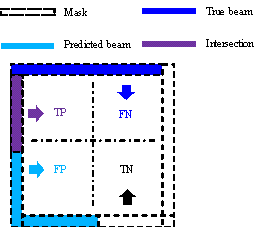
Figure 6. Confusion matrix calculation diagram
Based on the confusion matrix, additional classification metrics, including precision, recall, and F1 score, can be computed. The computation methods for these metrics are provided in Equation (8)~(10):



These metrics provide a comprehensive assessment of the generated beam layouts in terms of quality and consistency with engineer designs.
5 Diffusion Model Performance Analysis and Discussion
5.1 Impact of mask construction methods on generation results
Based on engineering experience rules that consider both the segmentation of architectural spaces and load-bearing requirements for cooperative shear wall behavior, this study constructed a rule-generated mask with a coverage ratio of approximately 98%. The mask, which constrains the beam generation process in the diffusion model, is strongly correlated with practical engineering experience. To verify whether the proposed mask construction method significantly improves diffusion model performance, three typical mask construction methods were compared and analyzed: (1) the proposed rule-generated mask, (2) a padding mask that does not integrate engineering experience rules, and (3) no mask constraint (denoted as no mask). The padding mask is generated by padding the external envelope of the building (Figure 7). This approach guarantees a 100% mask coverage rate and is easy to construct. However, its constraint specificity is relatively weak.
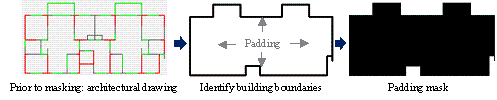
Figure 7. Construction method for the padding mask
Table 2 presents the average IoU and ACC values for beam
generation using the three mask approaches under different learning rates.
These results were obtained on the test split used for the mask-ablation experiment.
The IoU was calculated only within the candidate beam region covered by the
corresponding mask; thus, this metric evaluates local consistency within the
constrained generation region rather than full-plan layout consistency. On
the test set, the rule-generated mask produces an ACC close to 1, demonstrating
excellent performance, i.e., the accuracy of the generated beam layout closely
depends on whether the mask placement approximates the engineer’s design.
For the padding mask, the performance of the model at learning rates of 1
× 10-5 and 5 × 10⁻⁵ was superior to that at 1 × 10⁻⁶;
however, in all cases, these results were less superior than those achieved
by the rule-generated mask. This is because the rule-generated mask incorporates
engineering experience rules for architectural space segmentation and load-bearing
continuity, yielding design results that are closer to those produced by engineers.
In addition, the pixel count in the rule-generated mask is lower than that
in the padding mask. Although the latter constrains the focus of the diffusion
model within the building space, it introduces more noise (caused by a large
pixel range) than the former, ultimately resulting in low generation quality.
At the common learning rate of  , the rule-generated mask achieved a mean IoU of 0.975, compared with
0.791 for the padding mask and 0.151 for the no-mask setting. Therefore, relative
to the padding mask, the rule-generated mask improved IoU by 0.184 points
(23.3% relative improvement); relative to no mask, it improved IoU by 0.824
points (545.7% relative improvement). These results show that engineering-rule
specificity, rather than masking alone, substantially improves generation
quality.
, the rule-generated mask achieved a mean IoU of 0.975, compared with
0.791 for the padding mask and 0.151 for the no-mask setting. Therefore, relative
to the padding mask, the rule-generated mask improved IoU by 0.184 points
(23.3% relative improvement); relative to no mask, it improved IoU by 0.824
points (545.7% relative improvement). These results show that engineering-rule
specificity, rather than masking alone, substantially improves generation
quality.
|
Mask type |
Learning rate |
Average IoU |
IoU Std. Dev. |
Average ACC |
ACC Std. Dev. |
|
Rule-generated |
1×10⁻⁶ |
0.794 |
0.087 |
0.922 |
0.037 |
|
1×10⁻⁵ |
0.975 |
0.035 |
0.998 |
0.007 |
|
|
5×10⁻⁵ |
0.974 |
0.037 |
0.998 |
0.009 |
|
|
Padding mask |
1×10⁻⁶ |
0.394 |
0.123 |
0.887 |
0.042 |
|
1×10⁻⁵ |
0.791 |
0.113 |
0.983 |
0.012 |
|
|
5×10⁻⁵ |
0.747 |
0.111 |
0.980 |
0.012 |
|
|
No mask |
1×10⁻⁶ |
0.028 |
0.006 |
0.028 |
0.006 |
|
1×10⁻⁵ |
0.151 |
0.264 |
0.248 |
0.376 |
|
|
5×10⁻⁵ |
0.133 |
0.261 |
0.245 |
0.348 |
Table 3 presents the average and standard deviation of precision, recall, and F1 score values for a learning rate of 1 × 10⁻⁵ under the three mask methods. The values of the three metrics for the rule-generated mask approach are almost 1, indicating that the beam layouts are predicted with high accuracy. By contrast, using the None Mask constraint, the diffusion model performs poorly, i.e., the IoU values are less than 0.2, demonstrating that the inclusion of excessive, irrelevant noise significantly degrades prediction precision. Thus, constructing an effective mask significantly enhances the information density of the model when generating beam layouts and effectively reduces disturbances from irrelevant data. It is crucial to note that while the rule-generated mask covers approximately 98% of potential beam locations, the remaining 2% represents complex local connections and irregular nodes where rigid rules often fail. The diffusion model plays a critical role here. By learning from the probability distribution of engineer-designed data, the diffusion model effectively “in-paints” these missing details and resolves conflicts in the mask, ensuring the final topology is not just rule-compliant but also structurally continuous and logical. The ablation study (Table 2) confirms that without the generative capability of the diffusion model (i.e., using Mask alone), the system would lack the adaptability to handle these nuanced geometric conditions.
Table 3. Comparison of precision, recall, and F1 scores for different mask methods
|
Mask Type |
Precision Avg |
Precision Std |
Recall Avg |
Recall Std |
F1 Avg |
F1 Std |
|
Rule-generated mask |
0.998 |
0.009 |
0.998* |
0.010 |
0.998* |
0.008 |
|
Padding mask |
0.917 |
0.122 |
0.879 |
0.067 |
0.890 |
0.075 |
|
No mask |
0.177 |
0.323 |
0.959 |
0.077 |
0.196 |
0.293 |
Figure 8(a) illustrates the process of the diffusion model generating the beam channel tensor at the optimal learning rate on the masked dataset. Figure 8(b) compares the two cases, including the beam design images generated by the engineer and diffusion models with the different mask types, alongside the IoU similarity between the designs of the diffusion models and engineer. (Further design result examples are provided in Appendix B.)
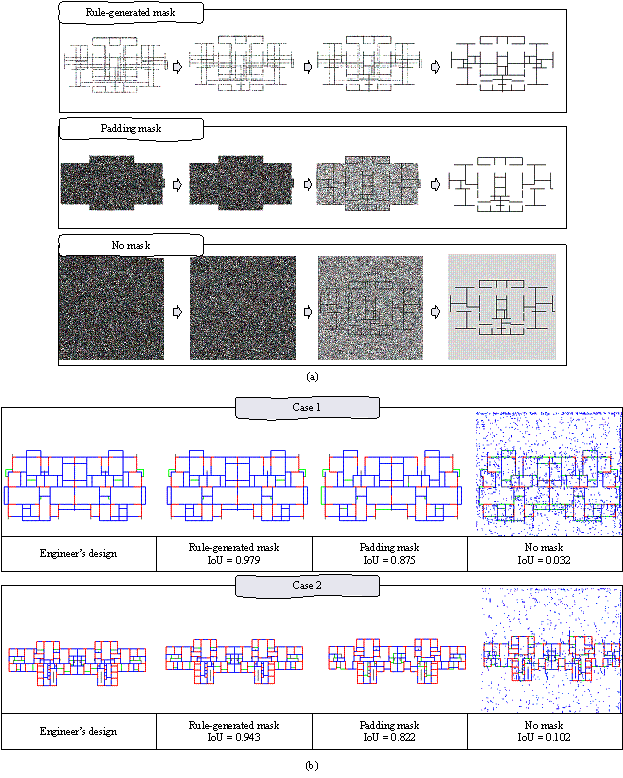
Figure 8. (a) Comparison of beam design generated under different mask methods; (b) Comparison between AI-generated beam and engineer-designed layouts, with the corresponding IoU similarity.
5.2 Comparison with existing intelligent design methods
The proposed rule-generated mask is developed from, but differs fundamentally from, the potential beam concept used in previous structural layout studies [8]. To clarify the methodological improvement, Table 4 compares the two approaches in terms of representation, integration with the learning model, geometric adaptability, generation task, and encoded engineering rules.
Table 4. Conceptual comparison between the potential beam method and the proposed rule-generated mask method.
|
Aspect |
Potential beam method |
Proposed rule-generated mask |
|
Representation |
Candidate graph edges or discrete line segments |
Pixel-wise admissible region for beam generation |
|
Integration with AI model |
Graph construction and candidate-edge classification in GNNs |
Spatial constraint during noise addition, loss calculation, denoising, and inference in the diffusion model |
|
Geometric adaptability |
Relies on discrete nodes and candidate edges |
Represents irregular wall boundaries and continuous architectural-space regions |
|
Generation task |
Classifies beam existence among predefined candidate edges |
Generates beam layouts through conditional image generation |
|
Encoded rules |
Candidate connections among structural components |
Vertical load transfer, horizontal load-bearing continuity, space segmentation, and redundant-mask cleaning |
The potential beam method represents feasible beam placements as discrete candidate segments and is well suited to graph-based edge-classification tasks. In contrast, the proposed rule-generated mask represents the admissible beam-generation domain as a continuous pixel-level region. This representation preserves the geometric information of irregular architectural components and spatial boundaries, while enabling the engineering rules to constrain the diffusion process directly.
The diffusion model trained with the rule-generated mask was compared with the state-of-the-art GNN approach developed by Zhao et al. [8], which represents the optimal current performance in design quality. For this head-to-head comparison, the methods were evaluated on the benchmark test dataset used by Zhao et al. [8]. Both the potential beams (constructed via the GNN) and masks in the present study serve as auxiliary inputs for facilitating AI beam layout design. The average IoU, its standard deviation, and the 95% confidence interval of the structural layouts generated by the two methods were evaluated on the same test dataset, as presented in Table 5.
Table 5. IoU comparison between the proposed diffusion model and baseline methods on the benchmark test dataset used by Zhao et al. [8]
|
Algorithm |
Average IoU ↑ |
IoU Std. Dev. |
95% Confidence Interval ↑ |
|
GNN |
0.623 |
0.087 |
(0.604, 0.641) |
|
Conditional GAN |
0.650 |
0.044 |
(0.641, 0.659) |
|
Segmentation Model |
0.614 |
0.049 |
(0.603, 0.625) |
|
U-Net |
0.568 |
0.041 |
(0.559, 0.577) |
|
Diffusion Model |
0.841 |
0.082 |
(0.823, 0.858) |
To separate the contribution of the diffusion formulation from that of the rule-generated mask, three additional baselines-a plain U-Net, a conditional GAN and a segmentation model were evaluated under the same rule-generated mask constraint. The learning-based baselines used the same training/validation split, benchmark test dataset, conditioning information, data augmentation protocol, output-composition rule, and binary threshold of 0.5. For each baseline, the best validation-selected configuration was reported, with test-time augmentation or model ensembling used where beneficial. As shown in Table 5, the proposed diffusion model achieved the highest average IoU of 0.841, compared with 0.650 for the conditional GAN, 0.614 for the segmentation model and 0.568 for the U-Net. Relative to the strongest controlled baseline, the conditional GAN, the proposed method improved the average IoU by 0.191 points (29.4%). Because the three additional baselines used the same mask constraint, this comparison indicates that iterative diffusion-based refinement provides benefits beyond the reduction of the admissible generation region alone.
Figure 9 illustrates a typical comparison between the designs generated by the diffusion model and those by the GNN. The performance indicators of the diffusion model design are 35.0% higher than those of the GNN. Because of the inherent limitations in the structural representation of the GNN, especially when the graph is irregular or the number of nodes is high, the GNN performs poorly in cases of irregular building layouts and complex component distributions. Under such conditions, the diffusion model offers superior design performance.
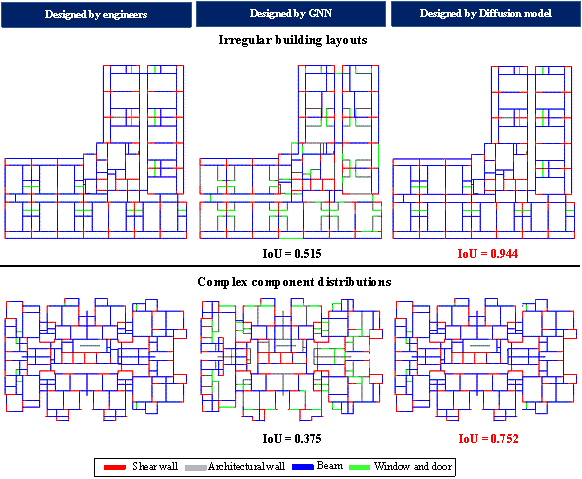
Figure 9. Comparison of design results between the GNN and the diffusion model in cases of irregular building layouts and complex component distributions.
Table 6. Comparison of the pixel-space U-Net DDPM, DiT, and LDM under the same rule-generated mask constraint.
|
Architecture |
Number of parameters |
Avg IoU [95% CI] |
|
U-Net DDPM |
29.0 M |
0.841 [0.823, 0.858] |
|
DiT |
27.2 M |
0.440 [0.357, 0.522] |
|
LDM |
29.1M + 6.2M VAE |
0.187 [0.150, 0.225] |
Under the current data regime, the U-Net DDPM achieved an average IoU of 0.841 (95% CI, 0.823–0.858), exceeding those of the DiT (0.440; 95% CI, 0.357–0.522) and LDM (0.187; 95% CI, 0.150–0.225). The three denoisers had comparable parameter counts, although the LDM additionally employed a 6.2 M-parameter VAE. Therefore, the observed performance differences cannot be attributed primarily to model capacity. Representative generation results are presented in Figure 10.
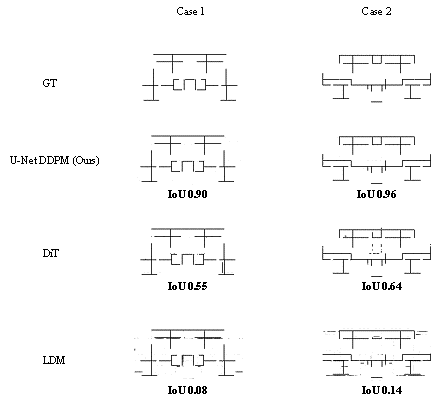
Figure 10. Representative beam-layout generation results of the pixel-space U-Net DDPM, DiT, and LDM under the same rule-generated mask constraint.
As shown in Figure 10, the pixel-space U-Net DDPM more accurately preserves beam endpoints and local connectivity, whereas the DiT produces more missing or discontinuous members and the LDM exhibits substantial loss of thin-member topology. For the LDM, the 4× latent downsampling can attenuate or merge one-pixel-wide beams and small admissible regions, even though the stage-1 VAE achieved a validation reconstruction IoU of 0.995. For the DiT, retaining these local details required a patch size of 4, corresponding to 4,096 tokens and consequently greater data and optimization demands. These findings do not imply that LDMs or DiTs are generally unsuitable for structural generation; rather, they indicate that the local inductive bias of the convolutional U-Net is better matched to the present small-sample, sparse binary topology task.
6 Case Study
6.1 Basic information of the case
The proposed diffusion model for beam generation was applied to a specific case: a residential building designed and constructed by one of China’s renowned design institutes. The building is characterized by the following parameters: structural height: 45 m, total above-ground floors: 15, seismic design intensity: eight degrees, design basis earthquake peak ground acceleration: 0.20g (10%/50-year exceedance probability, 475-year return period), site classification: II, seismic design group: 2, site characteristic period (Tg): 0.4 s, target seismic performance level: III, seismic design category: Class C.
6.2 Structural analysis results
For this design case, different masks were constructed and then fed into the trained diffusion model to generate beam layouts, which were subsequently compared with the engineer’s design. Figure 11 illustrates the comparison results. The design result obtained by the rule-generated mask achieves an IoU of 0.947, which is significantly higher than those of the other two methods. Specifically, the rule-generated mask placed beams at critical spatial segmentation locations, thereby yielding superior design outcomes. By contrast, although the padding mask could also generate reasonable beam layouts, it produced some impractical cantilever beam arrangements. Finally, for the no mask constraint, the abundance of global noise led to an incomplete representation of the overall structure.
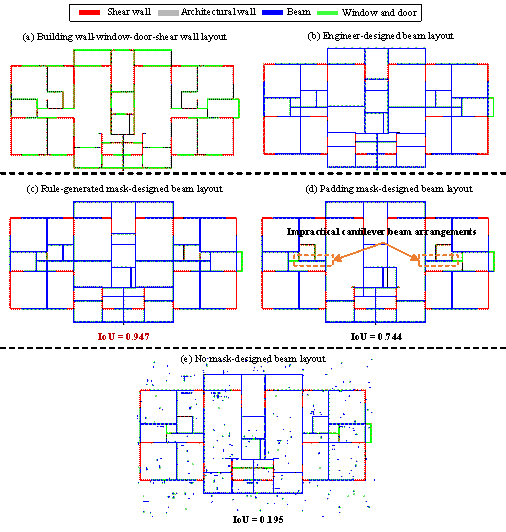
Figure 11. Comparison of beam generation results obtained using different mask constraints
For floor and load layouts, AIStructure-Copilot [51] was utilized along with an automated modeling process via the PKPM API, creating a building model for mechanical analysis. To ensure a fair topology-only comparison, the architectural scheme, shear wall layout, slab layout, material grades, load cases, seismic design parameters, and boundary conditions were kept identical for all models. Following the automated workflow of AIStructure-Copilot [51], the floor/slab layout and load information were generated from the common design inputs. The vectorized beam layouts were then transferred to PKPM through its API [52] to establish the finite element models. The diffusion model determined only beam presence and connectivity, rather than beam member dimensions. A common deterministic rule was used to initialize beam sections in every model: beams at corresponding locations were assigned identical initial dimensions, while beams existing only in a particular topology were assigned dimensions using the same rule and the same geometric and design inputs. PKPM subsequently performed the automated design and code-checking procedure under identical settings for all models, without topology-specific manual adjustment. Therefore, beam topology was the only varying input among the successfully modeled schemes. Subsequently, mechanical performance was analyzed and evaluated. Because of the excessive noise in designs generated without a mask constraint, automated and accurate vector extraction of the image could not be achieved, resulting in a modeling failure. Thus, further modeling analysis was not performed under this condition. The design evaluation was based on overall mechanical, component-level mechanical, and economic indices. These indicators are defined as follows:
Overall mechanical performance indicators: Mass ratio, floor shear/inter-story stiffness ratio, fundamental period(s), effective mass coefficient, seismic mass reduction factor, and the ratio of maximum inter-story drift to floor height under lateral loads.
Component mechanical indicators: Number of components exceeding reinforcement limits during the PKPM automatic reinforcement process.
Economic Indicators: Total concrete volume and rebar consumption.
Table 7. Comparison of PKPM mechanical indicators and material usage
|
Overall mechanical performance |
Component mechanical indicators (excessive reinforcement count) |
Concrete volume (m³) |
Rebar consumption (ton) |
||
|
Engineer’s Design |
Satisfactory |
0 |
834.0 |
75.3 |
|
|
Diffusion model |
Rule-generated mask |
Satisfactory |
0 |
830.4 |
73.9 |
|
Padding mask |
Satisfactory |
45 |
785.4 |
72.4 |
|
|
No mask (Modeling Failed) |
— |
— |
— |
— |
|
As presented in Table 7, both the engineer’s and diffusion model designs (where modeling was successful) meet the overall mechanical performance requirements. In the padding mask–based design, the beam layout was sparser; consequently, when the same reinforcement method was applied, more components exceeded the shear-torsion verification limits. By contrast, neither the engineer’s design nor the rule-generated mask-based design exhibited any components with excessive reinforcement. Regarding material usage, the padding mask, owing to its lower number of beam placements, resulted in reduced material consumption; however, the rule-generated mask produced results that were similar to the engineer’s design, with almost identical material usage. Thus, this case study demonstrates that the proposed mask-guided design is reasonable. Although the padding mask design encountered excessive reinforcement issues, such problems can be resolved in the subsequent stage of cross-sectional design, rendering the design acceptable.
Figure 12 shows the finite element model results of inter-story drift ratios for both the AI-generated and engineer-designed beam layouts. Specifically, the code limits the inter-story drift ratio to 1/1000. In this case, all designs meet this limit. Along the x-direction, the inter-story drift ratios produced by the diffusion model using both the rule-generated and padding masks are close to those of the engineer’s design. In the y-direction, the mask-constrained design (rule-generated mask) most accurately replicates the engineer’s design and outperforms the padding mask-based diffusion model.
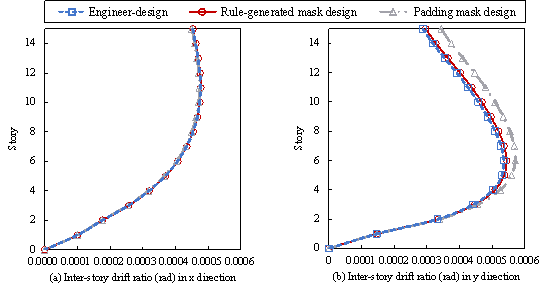
Figure 12. Comparison of inter-story drift ratios between engineer-designed and AI-designed beam layout finite element models
7 Conclusion and Future Work
This study addressed the challenge of uncontrolled generation regions in diffusion models using beam layout design by encoding engineering experience rules into a mask that constrains the generation boundaries of the diffusion model. This approach ensured that the design results were both controllable and effective, thus establishing an intelligent design method for beam layouts driven by a mask-constrained diffusion model. By synergistically optimizing the mask mechanism with the high-fidelity generation capability of the diffusion model, the proposed method significantly enhanced the rationality, controllability, and practical engineering applicability of beam layout designs. The main contributions and conclusions of this study are as follows:
(1) Rule-based mask construction: Engineering rules governing space segmentation, vertical load transfer, and horizontal load continuity were encoded into masks for admissible beam placement. The resulting masks achieved a mean coverage ratio of 97.9%, indicating that they captured most beam locations adopted in engineer-designed cases.
(2) Rule-guided diffusion-based beam layout generation: Engineering rules were encoded into a learnable mask and incorporated into both the training and inference processes of a conditional diffusion model. The rule-generated mask outperformed the padding-mask and no-mask settings, while the proposed method improved the mean IoU by 35.0% over the graph neural network baseline.
(3) Validation in practical engineering cases: In a practical engineering case study, the beam layout generated using the mask was highly consistent with the engineer’s design (IoU = 0.947), effectively avoiding both global and localized unreasonable component arrangements. Moreover, the mechanical performance indices fully complied with code requirements, and the material usage deviated by less than 1% compared with manual designs.
The main strengths of the proposed method are its explicit incorporation of engineering knowledge, its ability to generate detailed local layouts, and its compatibility with automated structural analysis workflows. Its current limitations are that the rule set was derived from one design context, the dataset size remains moderate, and validation was limited to shear wall residential structures. Future research will extend the mask generation approach to these cases with large unsegmented floor slabs by generating candidate beam masks along functional-space boundaries, architectural component alignments, and load-transfer paths. The applicability of the extended approach to frame and frame–core-tube structures, as well as to the collaborative design of wall–beam–column systems, will be further investigated. Importantly, future work will further investigate latent-diffusion and Transformer-based diffusion backbones using larger beam-layout datasets and representations that better preserve thin-member topology and mask fidelity.
Acknowledgment
This work is supported by the National Natural Science Foundation of China (No. 52408348), Sichuan Science and Technology Program (2025ZNSFSC1312), Fundamental Research Funds for the Central Universities (XJ2024009101), Beijing Municipal Science & Technology Commission, Administrative Commission of Zhongguancun Science Park (Z231100005923043), and the Tencent Foundation through the XPLORER PRIZE.
References
[1] R. Park, T. Paulay, Reinforced concrete structures, 1st ed., John Wiley & Sons, Ltd, 1975. https://doi.org/10.1002/9780470172834.
[2] S. Guo, C. Wu, Y. Chu, Structural design of high-rise buildings, 1st ed., Chongqing University Press, 2022 (in Chinese).
[3] W. Liao, X.Z. Lu, Y. Fei, Y. Gu, Y. Huang, Generative AI design for building structures, Autom. Constr. 157 (2024) 105187. https://doi.org/10.1016/j.autcon.2023.105187.
[4] P. Zhao, Y. Fei, Y. Huang, Y. Feng, W. Liao, X.Z. Lu, Design-condition-informed shear wall layout design based on graph neural networks, Adv. Eng. Inform. 58 (2023) 102190. https://doi.org/10.1016/j.aei.2023.102190.
[5] P. Zhao, W. Liao, Y. Huang, X.Z. Lu, Intelligent design of shear wall layout based on attention-enhanced generative adversarial network, Eng. Struct. 274 (2023) 115170. https://doi.org/10.1016/j.engstruct.2022.115170.
[6] X. Zhou, L. Wang, J. Liu, G. Cheng, D. Chen, P. Yu, Automated structural design of shear wall structures based on modified genetic algorithm and prior knowledge, Autom. Constr. 139 (2022) 104318. https://doi.org/10.1016/j.autcon.2022.104318.
[7] P. Zhao, W. Liao, Y. Huang, X.Z. Lu, Intelligent beam layout design for frame structure based on graph neural networks, J. Build. Eng. 63 (2023) 105499. https://doi.org/10.1016/j.jobe.2022.105499.
[8] P. Zhao, W. Liao, Y. Huang, X.Z. Lu, Beam layout design of shear wall structures based on graph neural networks, Autom. Constr. 158 (2024) 105223. https://doi.org/10.1016/j.autcon.2023.105223.
[9] J. Xia, W. Liao, B. Han, S. Zhang, X.Z. Lu, Intelligent co-design of shear wall and beam layouts using a graph neural network, Autom. Constr. 172 (2025) 106024. https://doi.org/10.1016/j.autcon.2025.106024.
[10] J. Xia, X. Chen, W. Liao, X.Z. Lu, Intelligent design method for structural layouts based on generative adversarial networks and shear wall-beam joint training, J. Tsinghua Univ. (Sci. Technol.) 65 (2025) 2539–2551. https://doi.org/10.16511/j.cnki.qhdxxb.2025.21.044.
[11] S. Qin, W. Liao, Y. Huang, S. Zhang, Y. Gu, J. Han, X.Z. Lu, Intelligent design for component size generation in reinforced concrete frame structures using heterogeneous graph neural networks, Autom. Constr. 171 (2025) 105967. https://doi.org/10.1016/j.autcon.2025.105967.
[12] Y. Fei, W. Liao, X.Z. Lu, H. Guan, Knowledge‐enhanced graph neural networks for construction material quantity estimation of reinforced concrete buildings, Comput.-Aided Civ. Infrastruct. Eng. 39 (2024) 518–538. https://doi.org/10.1111/mice.13094.
[13] Y. Fei, S. Qin, W. Liao, H. Guan, X.Z. Lu, Graph neural network-assisted evolutionary algorithm for rapid optimization design of shear-wall structures, Adv. Eng. Inform. 65 (2025) 103129. https://doi.org/10.1016/j.aei.2025.103129.
[14] F. Liu, Y. Li, F. Liang, J. Xu, B. Huang, J. Shao, Mask hierarchical features for self-supervised learning, (2023). https://doi.org/10.48550/arXiv.2304.00218.
[15] Z. Wang, R. Sacks, T. Yeung, Exploring graph neural networks for semantic enrichment: room type classification, Autom. Constr. 134 (2022) 104039. https://doi.org/10.1016/j.autcon.2021.104039.
[16] P.N. Pizarro, L.M. Massone, Structural design of reinforced concrete buildings based on deep neural networks, Eng. Struct. 241 (2021) 112377. https://doi.org/10.1016/j.engstruct.2021.112377.
[17] P.N. Pizarro, L.M. Massone, F.R. Rojas, R.O. Ruiz, Use of convolutional networks in the conceptual structural design of shear wall buildings layout, Eng. Struct. 239 (2021) 112311. https://doi.org/10.1016/j.engstruct.2021.112311.
[18] Y. Fei, W. Liao, S. Zhang, P. Yin, B. Han, P. Zhao, X. Chen, X.Z. Lu, Integrated schematic design method for shear wall structures: A practical application of generative adversarial networks, Buildings 12 (2022) 1295. https://doi.org/10.3390/buildings12091295.
[19] Y. Fei, W. Liao, Y. Huang, X.Z. Lu, Knowledge-enhanced generative adversarial networks for schematic design of framed tube structures, Autom. Constr. 144 (2022) 104619. https://doi.org/10.1016/j.autcon.2022.104619.
[20] W. Liao, Y. Huang, Z. Zheng, X.Z. Lu, Intelligent generative structural design method for shear wall building based on “fused-text-image-to-image” generative adversarial networks, Expert Syst. Appl. 210 (2022) 118530. https://doi.org/10.1016/j.eswa.2022.118530.
[21] W. Liao, X.Z. Lu, Y. Huang, Z. Zheng, Y. Lin, Automated structural design of shear wall residential buildings using generative adversarial networks, Autom. Constr. 132 (2021) 103931. https://doi.org/10.1016/j.autcon.2021.103931.
[22] W. Liao, X. Wang, Y. Fei, Y. Huang, L. Xie, X.Z. Lu, Base‐isolation design of shear wall structures using physics‐rule‐co‐guided self‐supervised generative adversarial networks, Earthq. Eng. Struct. Dyn. 52 (2023) 3281–3303. https://doi.org/10.1002/eqe.3862.
[23] X.Z. Lu, W. Liao, Y. Zhang, Y. Huang, Intelligent structural design of shear wall residence using physics‐enhanced generative adversarial networks, Earthq. Eng. Struct. Dyn. 51 (2022) 1657–1676. https://doi.org/10.1002/eqe.3632.
[24] P. Zhao, W. Liao, H. Xue, X.Z. Lu, Intelligent design method for beam and slab of shear wall structure based on deep learning, J. Build. Eng. 57 (2022) 104838. https://doi.org/10.1016/j.jobe.2022.104838.
[25] C. Zhang, M. Tao, C. Wang, J. Fan, End‐to‐end generation of structural topology for complex architectural layouts with graph neural networks, Comput.-Aided Civ. Infrastruct. Eng. 39 (2024) 756–775. https://doi.org/10.1111/mice.13098.
[26] N. Nauata, K.-H. Chang, C.-Y. Cheng, G. Mori, Y. Furukawa, House-GAN: relational generative adversarial networks for graph-constrained house layout generation, in: Comput. Vis. – ECCV 2020 16th Eur. Conf. Glasg. UK August 23–28 2020 Proc. Part I, Springer-Verlag, Berlin, Heidelberg, 2020: pp. 162–177. https://doi.org/10.1007/978-3-030-58452-8_10.
[27] N. Nauata, S. Hosseini, K.-H. Chang, H. Chu, C.-Y. Cheng, Y. Furukawa, House-GAN++: Generative adversarial layout refinement network towards intelligent computational agent for professional architects, in: 2021 IEEECVF Conf. Comput. Vis. Pattern Recognit. CVPR, IEEE, Nashville, TN, USA, 2021: pp. 13627–13636. https://doi.org/10.1109/CVPR46437.2021.01342.
[28] Y. Gu, Y. Huang, W. Liao, X.Z. Lu, Intelligent design of shear wall layout based on diffusion models, Comput.-Aided Civ. Infrastruct. Eng. 39 (2024) 3610–3625. https://doi.org/10.1111/mice.13236.
[29] J. Ho, A. Jain, P. Abbeel, Denoising Diffusion Probabilistic Models, (2020). https://doi.org/10.48550/arXiv.2006.11239.
[30] Y. Zhou, H. Leng, S. Meng, H. Wu, Z. Zhang, StructDiffusion: End-to-end intelligent shear wall structure layout generation and analysis using diffusion model, Eng. Struct. 309 (2024) 118068. https://doi.org/10.1016/j.engstruct.2024.118068.
[31] R. Rombach, A. Blattmann, D. Lorenz, P. Esser, B. Ommer, High-resolution image synthesis with latent diffusion models, in: 2022 IEEECVF Conf. Comput. Vis. Pattern Recognit. CVPR, IEEE, New Orleans, LA, USA, 2022: pp. 10674–10685. https://doi.org/10.1109/CVPR52688.2022.01042.
[32] E. Herron, J. Rade, A. Jignasu, B. Ganapathysubramanian, A. Balu, S. Sarkar, A. Krishnamurthy, Latent diffusion models for structural component design, Comput.-Aided Des. 171 (2024) 103707. https://doi.org/10.1016/j.cad.2024.103707.
[33] W. Zhang, G. Zhao, L. Su, Research on multi-stage topology optimization method based on latent diffusion model, Adv. Eng. Inform. 63 (2025) 102966. https://doi.org/10.1016/j.aei.2024.102966.
[34] J. Li, W. Wang, B. Fu, Y. Gao, FrameDiffusion: A latent diffusion model for intelligent layout design of steel frame-braced structures, Eng. Struct. 343 (2025) 121195. https://doi.org/10.1016/j.engstruct.2025.121195.
[35] W. Peebles, S. Xie, Scalable diffusion models with transformers, in: 2023 IEEECVF Int. Conf. Comput. Vis. ICCV, IEEE, Paris, France, 2023: pp. 4172–4182. https://doi.org/10.1109/ICCV51070.2023.00387.
[36] M. Reuss, Ö.E. Yağmurlu, F. Wenzel, R. Lioutikov, Multimodal diffusion transformer: Learning versatile behavior from multimodal goals, (2024). https://doi.org/10.48550/arXiv.2407.05996.
[37] H. Wang, Z. Du, Y. Mei, X. Li, S. Tang, Unstructured diffusion generative design of metamaterials for irregular design domains, Comput. Struct. 322 (2026) 108111. https://doi.org/10.1016/j.compstruc.2026.108111.
[38] A. Lutheran, S. Das, A. Tabarraei, Diffusion transformers with hybrid conditioning for structural optimization, arXiv:2605.02158 (2026). https://doi.org/10.48550/arXiv.2605.02158.
[39] P. Zeng, W. Gao, J. Yin, P. Xu, S. Lu, Residential floor plans: Multi-conditional automatic generation using diffusion models, Autom. Constr. 162 (2024) 105374. https://doi.org/10.1016/j.autcon.2024.105374.
[40] S. Li, G. Chen, Y. Liang, W. Cai, M. Merzouk, Z. Xu, Automated 3D layout generation of urban buildings based on multi-channel fusion diffusion, Autom. Constr. 179 (2025) 106491. https://doi.org/10.1016/j.autcon.2025.106491.
[41] H. Zhang, A. Savov, B. Dillenburger, MaskPLAN: Masked generative layout planning from partial input, in: 2024 IEEE/CVF Conf. Comput. Vis. Pattern Recognit. (CVPR), IEEE, 2024: pp. 8964–8973. https://doi.org/10.1109/CVPR52733.2024.00856.
[42] O. Lucena, R. Souza, L. Rittner, R. Frayne, R. Lotufo, Silver standard masks for data augmentation applied to deep-learning-based skull-stripping, (2017). https://doi.org/10.48550/arXiv.1710.08354.
[43] A.E. Maxwell, P. Pourmohammadi, J.D. Poyner, Mapping the topographic features of mining-related valley fills using mask R-CNN deep learning and digital elevation data, Remote Sens. 12 (2020) 547. https://doi.org/10.3390/rs12030547.
[44] Y. Shao, Q. Kong, T. Matsumura, T. Fuji, K. Ito, H. Mizuno, Mask atari for deep reinforcement learning as POMDP benchmarks, (2022). https://doi.org/10.48550/arXiv.2203.16777.
[45] A.J.R. Simpson, Probabilistic binary-mask cocktail-party source separation in a convolutional deep neural network, (2015). https://doi.org/10.48550/arXiv.1503.06962.
[46] T. Vu, T. Bao, Q.V. Hoang, C. Drebenstetd, P.V. Hoa, H.H. Thang, Measuring blast fragmentation at nui phao open-pit mine, vietnam using the mask R-CNN deep learning model, Min. Technol. 130 (2021) 232–243. https://doi.org/10.1080/25726668.2021.1944458.
[47] K. Xu, K. Guan, J. Peng, Y. Luo, S. Wang, DeepMask: An algorithm for cloud and cloud shadow detection in optical satellite remote sensing images using deep residual network, (2019). https://doi.org/10.48550/arXiv.1911.03607.
[48] Y. Yang, Y. Huang, M. Shi, K. Chen, W. Zhang, Invertible mask network for face privacy preservation, Inf. Sci. 629 (2023) 566–579. https://doi.org/10.1016/j.ins.2023.02.013.
[49] J. Han, X.Z. Lu, Y. Gu, W. Liao, Q. Cai, H. Xue, Optimized data representation and understanding method for the intelligent design of shear wall structures, Eng. Struct. 315 (2024) 118500. https://doi.org/10.1016/j.engstruct.2024.118500.
[50] K. He, X. Zhang, S. Ren, J. Sun, Delving Deep into Rectifiers: Surpassing Human-Level Performance on ImageNet Classification, (2015). https://doi.org/10.48550/arXiv.1502.01852.
[51] S. Qin, W. Liao, S. Huang, K. Hu, Z. Tan, Y. Gao, X.Z. Lu, AIstructure-copilot: Assistant for generative AI-driven intelligent design of building structures, Smart Constr. (2024). https://doi.org/10.55092/sc20240001.
[52] Beijing Gouli Technology Co., Ltd., Exploring structural parametric adjustment and optimization using the PKPM secondary-development API, PKPM Technical Documentation (2021). https://help.pkpm.cn/admin/ms/detail?SiteID=123&id=3162 (in Chinese).
Appendix A: Derivation of the Diffusion Model with Mask
1. Forward Process
The forward diffusion process is defined as a Markov chain in which Gaussian noise is gradually added to the input data:


Here,
l
 is the noise scheduling hyperparameter (increasing linearly
from 10-6 to 0.01).
is the noise scheduling hyperparameter (increasing linearly
from 10-6 to 0.01).
l when t = T, xT approximates pure Gaussian noise.
l
 represents the noise retention coefficient, and
  .
.
Using the reparameterization trick, xt can be directly sampled from x0:

2. Incorporation of the Mask Tensor
In this study, a corresponding mask was constructed for
each data sample. A mask tensor, xmask, is introduced to
focus the optimization on key regions (e.g., potential beam locations). The
noisy input,  , is defined as

The physical interpretation of this expression is that noise
is added only in regions where xmask = 1, whereas the remaining
areas retain their original values. Consequently, the term  indicates that the generation process is optimized exclusively
for the beam-related regions.
indicates that the generation process is optimized exclusively
for the beam-related regions.
3. Reverse Denoising Process
A neural network 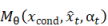 is constructed, which takes as inputs the conditional tensor
 , noisy input
  , and noise level
  . The network is trained to predict the noise
  by optimizing the following loss function:

Thus, the key aspect of model training is that the loss
is weighted by  , ensuring that only the prediction error within the designated shear
wall (or beam) regions is considered.
, ensuring that only the prediction error within the designated shear
wall (or beam) regions is considered.
4. Estimation of the Mean in the Reverse Process
Using the predicted noise  ,
,  can be estimated, denoted as
  :
:

Substituting this into the posterior distribution formula yields the estimated mean for the reverse process:

The variance is fixed as  , and the reverse sampling process is as

By employing  to constrain the optimization region, unnecessary computation
over the entire image is avoided, thereby enhancing feature density. In terms
of image generation quality, the iterative denoising property of the diffusion
model preserves rich spatial information. Moreover, the conditional tensor
to constrain the optimization region, unnecessary computation
over the entire image is avoided, thereby enhancing feature density. In terms
of image generation quality, the iterative denoising property of the diffusion
model preserves rich spatial information. Moreover, the conditional tensor
 can integrate building design parameters (e.g., height
and seismic intensity), supporting the incorporation of additional information.
can integrate building design parameters (e.g., height
and seismic intensity), supporting the incorporation of additional information.
Appendix B: Intelligent Design Results
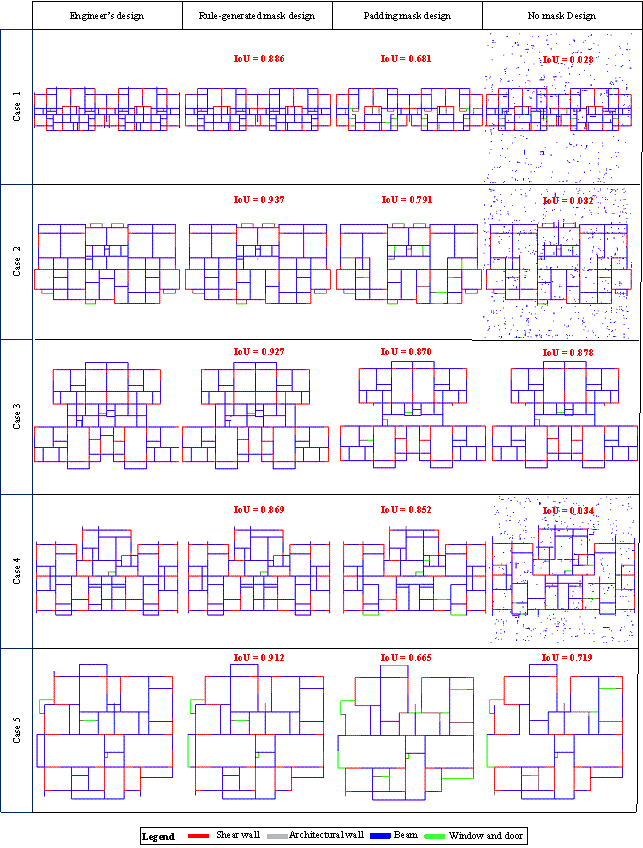
Figure B.1. Additional test cases of beam generation using the mask-constrained diffusion model.
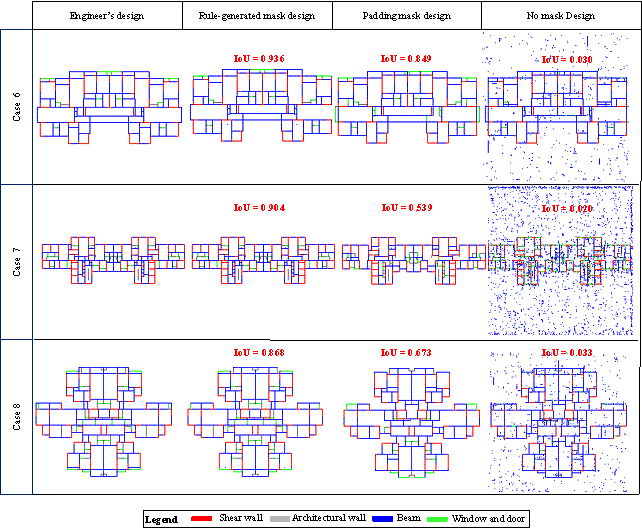
Figure B.1. (Continue)