Bond-slip model for FRP-Concrete interface
|
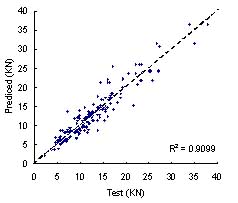
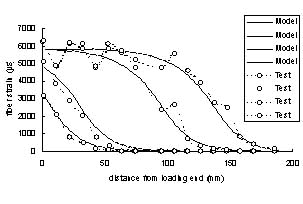
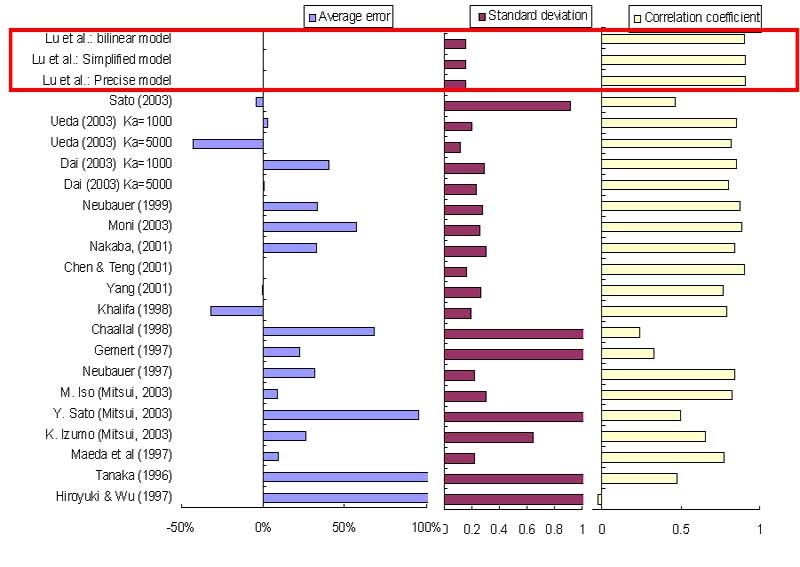
Bond-slip models for the FRP-concrete interface are proposed based on meso-scale FE results. These models are better than any other existing design or analysis models. Supervisors: Prof. J. G. Teng of the Hong Kong Polytechnic University. Prof. L. P. Ye and J. J. Jiang of Tsinghua University. Paper download Bond-slip models for FRP sheets/plates externally bonded to concrete. Engineering Structures. 2005. 27(6). 920-937 ABSTRACT: An accurate local bond-slip model is of fundamental importance in the modelling of FRP-strengthened RC structures. In this paper, a review of existing bond strength models and bond-slip models is first presented. These models are then assessed using the results of 253 pull tests on simple FRP-to-concrete bonded joints, leading to the conclusion that a more accurate model is required. In the second half of the paper, a set of three new bond-slip models of different levels of sophistication are proposed. A unique feature of the present work is that the new bond-slip models are not based on axial strain measurements on the FRP plate; instead, they are based on the predictions of a meso-scale finite element model, with appropriate adjustment to match their predictions with the experimental results for a few key parameters. Through comparisons with the large test database, all three bond-slip models are shown to provide accurate predictions of both the bond strength (i.e. ultimate load) and the strain distribution in the FRP plate. KEYWORDS: FRP, concrete, bond, bond-slip models, bond strength, pull tests, finite element simulation, composites |
|
 |
 |
|
Comparison
for ultimate strength
|
Comparison
for FRP strain
|
 |
|
|
Comparsion
with existing models
|
|